Photos and text by Macy Castañeda Lee

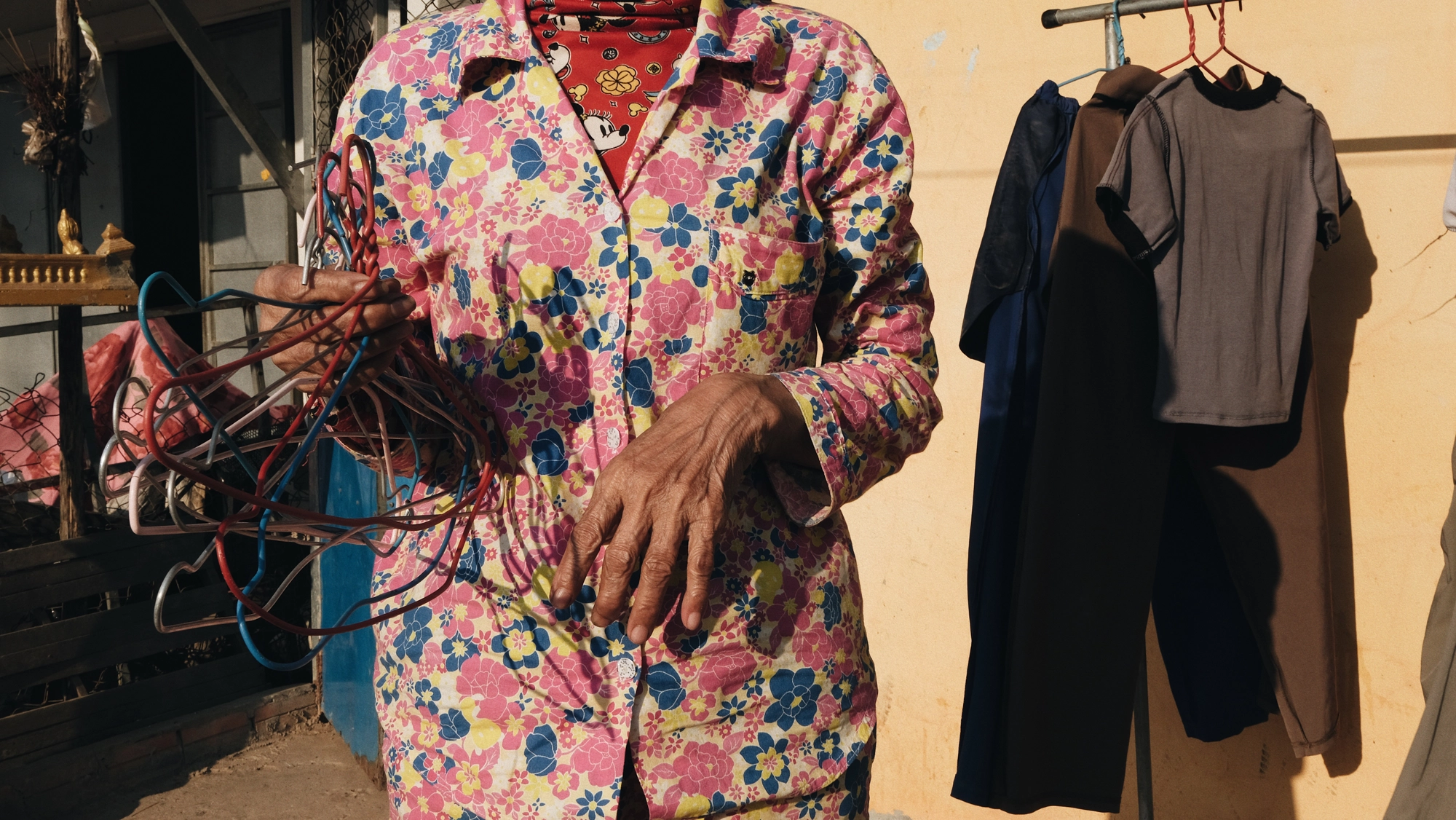
បោកគក់, Laundry, is a universal symbol of time and its cyclical nature. We all do laundry. We all wait for our laundry. We all rely on laundry. Yet laundry is done in many different ways, especially in parts of the world like Southeast Asia. Some people wash their clothes outdoors, some hang them outside their homes, others inside. Laundry, with its ever-evolving presentations across places and cultures, becomes a quiet marker of daily life. In Siem Reap, laundry connects the social landscape of communities, homes, streets, and livelihoods.


I love doing laundry and seeing it everywhere around the world. What I love most about doing laundry is its meditative and repetitive nature. It is a chore that teaches a lot of patience. I began noticing how different it looks from place to place and started asking why. I’ve always admired how it looks in Southeast Asia in particular. Laundry here is full of color, unique form, and found in the most interesting places. Laundry reveals socio-economic realities such as income inequality, environmental concerns, healthcare, and housing/infrastructure. It is also a symbol of the cycle of time. Laundry is a universal fact of life.

Siem Reap is known primarily for Angkor Wat, and its myriad of Hindu-Buddhist temples. This UNESCO World Heritage site receives hundreds of thousands of tourists each year, who put an immense strain on both the sites and the local infrastructure. Across Siem Reap and in the nearby countryside, laundry services have sprung up to supplement the incomes of rural communities. A kilo of laundry typically costs 3-4,000 riel, or about 75 cents to 1 US dollar.


Using laundry as a guide, and a way to strike up conversations, I met locals who shared their stories and experiences of what it means to be Khmer today. If I saw them doing their laundry outdoors, I would ask them how long they’ve been working on it and other things they did during their day. A lot of them start doing their laundry washing early in the morning and lay clothes out to dry in the afternoon. In my conversations with the locals, they told me a lot about their environment, the jobs they work, their families, and also a lot about their personalities.


ហូនម៉ែ ថាណា (Hau N Me Tha Na or Honme Thana) is a mother of three and is starting a laundry business by the Coconut Shell Coffee House, left of National Road 63 near a vast field, South of the Siem Reap River. She sells snacks and offers laundry services right by her home to a lot of people working in the farms and the fields. She lives by the river, so water access is also an option from this source, aside from at home utilities. There is not much water around this area and it is harder to do laundry, so setting up this service would be helpful to a lot of people. “I’m young, I’m a mother, I am learning how to work with nature. Life here is slow.”


Many of the Cambodians I encountered were generous with their time and welcomed me into their lives with kind hearted openness. Despite this, conversations revealed how unstable the Cambodian economy is (for example, how often their currency rates fluctuate and how the Cambodian Riel functions mainly as a small change currency as opposed to the usage of US dollars in the country).


It’s also revealed how people struggle with earning enough money in a year. For example, one of the individuals I met in the creation of this project, Chan Bro Pov, shared how his laundry business and rice farm business do not sustain him and his extended family. He is still actively looking for more work to help sustain his nieces and nephews in school. Many of these individuals shared that it is particularly harder to earn for those living in rural areas far from cities or tourist areas since they have less opportunities for customers and clients, and also have much lower pay/salaries as compared to the aforementioned places.


Environmental and health issues are very prevalent in Siem Reap, seen in the environments photographed in this project. There are many open areas in this region with stagnant water. The risk of vector borne diseases such as dengue is pervasive in many parts of Cambodia. In Siem Reap, residents try to protect themselves by buying many mosquito nets and even using the hanging laundry as a barrier. A lot of people sleep without air conditioning or electric fans due to its high price and lack of infrastructure, and try their best to innovate other ways to cool down at night.

Sothea Chea, one of the folks interviewed for the project shares: “Everything in my home is made from fabric that me and my brother found, along with mats we reused to protect our home from rain and insects. We hang up our laundry around here as well. It is hard but we try our best to make it work. We also wash laundry for neighbours and charge very little to help us get by, but we make life work well for ourselves.”


As Cambodia’s tourism industry recovers from the Covid-19 pandemic, foreign visitors to Siem Reap arrive in greater numbers each day reaching 6.7 million international visitors in 2024. While locals expressed that they too wish to enjoy their country, many do not have the means to. Parents also spoke about wanting better education for their children and stronger English skills, while not knowing where they themselves could learn or practise. There remains a tendency to glorify the West, and a desire to earn US dollars due to its higher value and use to make daily expenses much easier. As these conversations unfolded, lines of laundry become more than just wet clothing; they became a strong symbol of hope, renewal, resilience, and patience.

These photographs were made during the 20th Edition Angkor Photo Workshops (2025).
ℹ️ Macy Castañeda Lee (they/them) is a non-binary Filipino photographer, organizer, public speaker, & curator. They focus on advocating for psychology, mental health, social justice, and education in the work they do. They are currently based between the Philippines & New York City.